In 1995, the Conservative government under John Major designated pavement crossovers as ‘permitted development’. This fired the starting gun on the conversion of the nation’s front gardens to car parks. Nearly 30 years on, the consequences of this are all too apparent. In Ealing, as in most other London boroughs and urban and suburban areas throughout the country, there are roads where all the front gardens have been paved over. As well as effectively widening the road by two or three times, this transformation has had many damaging consequences (as explained in: Greening Front Gardens).
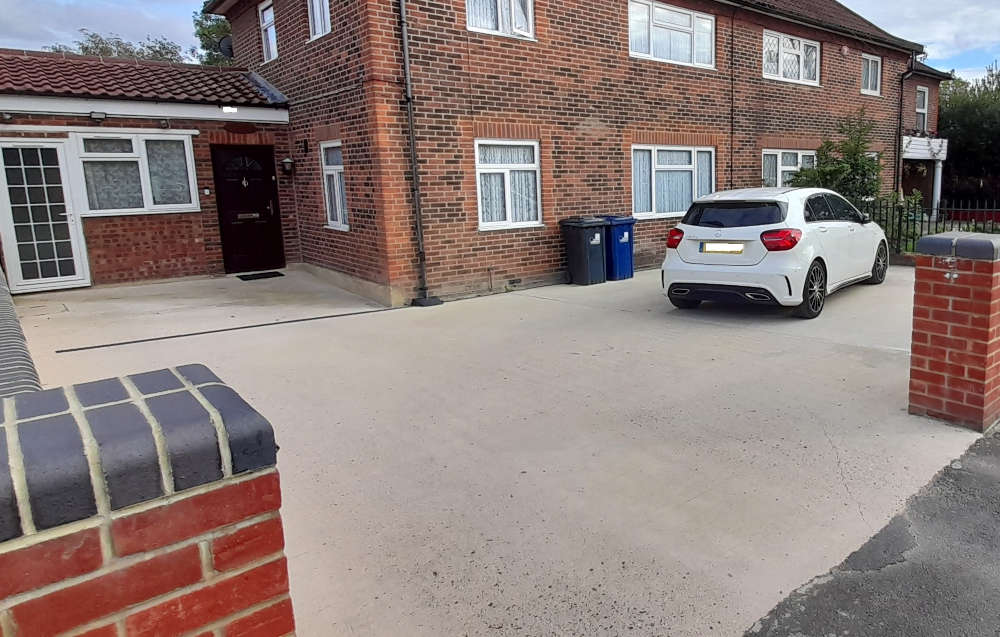
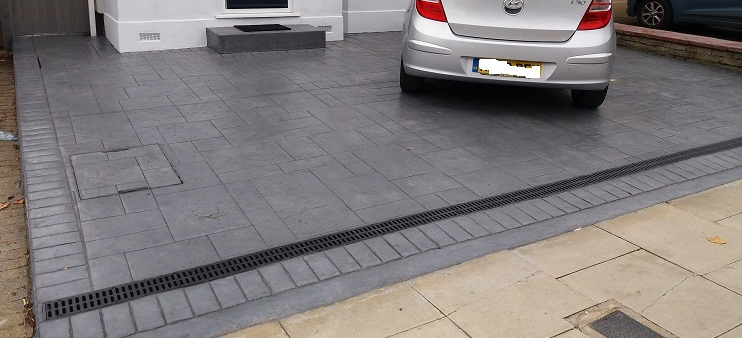
A large hard-surfaced front garden with no greenery at all - the grille soakaway makes it entirely legal.
From the start, these consequences quickly became apparent, yet nothing has been done. The only concession to the numerous problems caused is some additional regulation about flood risk introduced in 2008 for England (see below).
So there’s still nothing to stop the whole front garden being paved or concreted over. And now, that’s exactly what’s happening. Even people who parked in their front garden but had some greenery before are now putting in blanket hard surfacing and removing every hedge and flower bed.
Often, this is so they can home-charge their electric vehicles, which has a lower VAT rate than on-street charging. Perceived ease of maintenance and persuasive deals and special offers from paving contractors and manufacturers also play a part.
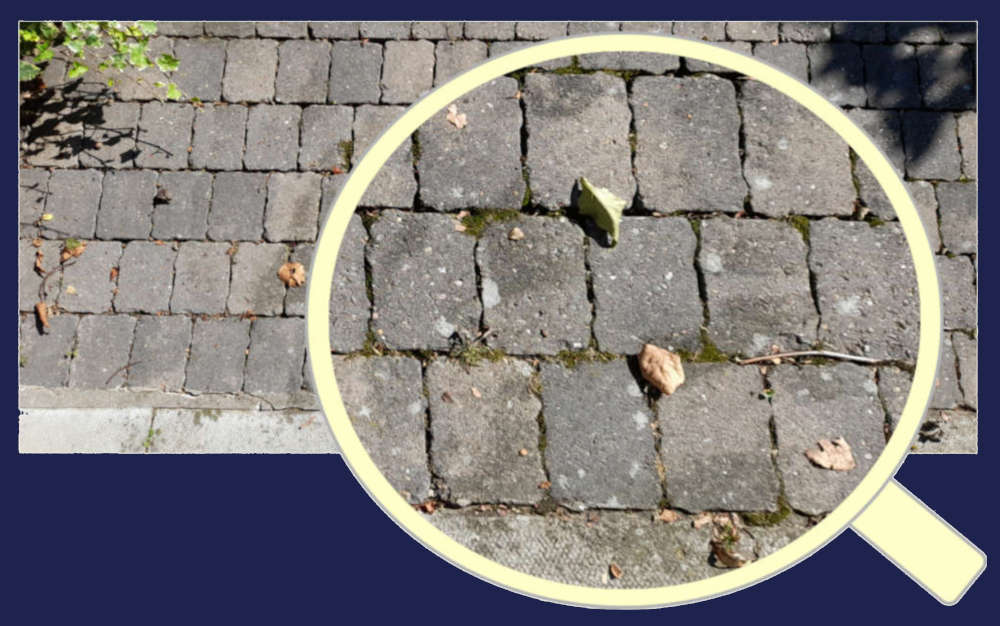
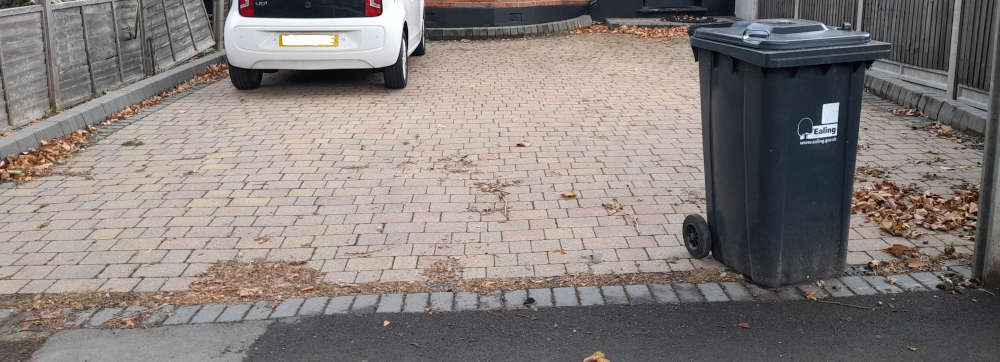
Six months after this permeable paving was installed, moss, debris and weeds are already present.
In 2008, after serious flooding in some English cities in 2007, additional regulations were rushed through under Gordon Brown’s Labour administration.
These regulations say the parking surface must either be porous or have a soakaway area. They’re intended to prevent rain running straight off the front garden, into the road drains and thence to the sewers which, if overloaded, leads to serious and unpleasant flooding of houses and businesses over a wide area.
Are these regulations working?
Not well, according to our observations. They’re quite often disregarded. But even if followed, the two options usually offered by contractors, “permeable” paving or a soakaway device, can fail in the increasingly heavy downpours we’re now getting.
“Permeable” paving is a popular and heavily-promoted option. It’s precast concrete blocks, made to look like stone or brick, but with edges designed to create small gaps between each block. The gaps are intended to let rain percolate into the substrate and soil below. But, even if correctly installed, the gaps get blocked quite quickly with debris.
It doesn’t take long for moss spores, weed seeds, atmospheric dust and the leaves, twigs, flower and seed casings from street trees to find their way into the cracks. They’re blown and washed in by wind and rain, and pressed in by footfall and vehicles. This accumulated debris begins to slow the drainage and hold water, creating the perfect seed bed.
Weeds and moss excel at growing fast so it’s not long, even if the surface is swept regularly as recommended, before they make their presence felt. Householders may then use weedkiller, weed-killing sand , pressure hosing, physical removal, or even blocking the gaps with mortar. But without assiduous maintenance it’s a losing battle, so many people just let nature take its course, with an occasional sweep over or hose down to slow the process and look reasonably presentable – for a while.
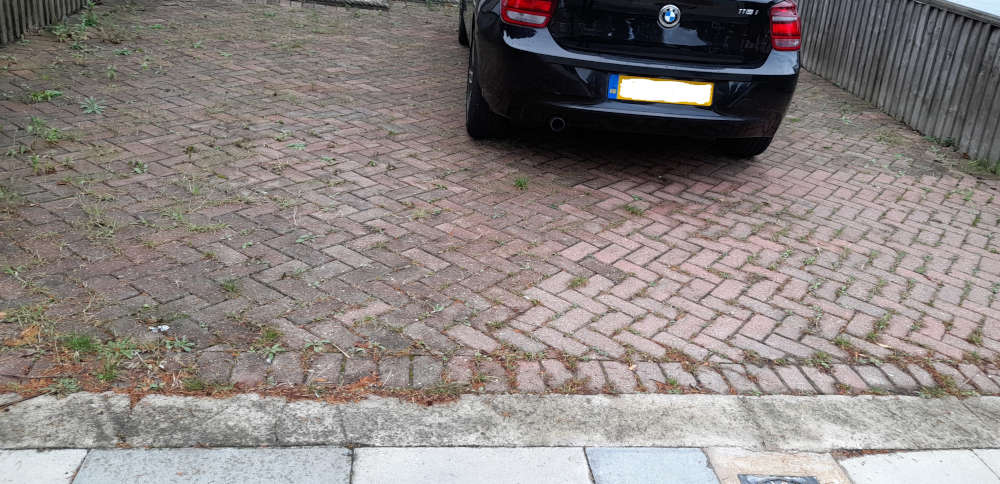
A garden entirely covered with permeable paving: weeds, moss and debris accumulate between the gaps.
The end result is that after a period, which can be several years but can be much less, the permeability of this kind of paving is reduced so much that it just can’t absorb prolonged or heavy rain effectively.
The manufacturers may claim that accumulated debris slows but doesn’t stop rain soaking away. Maybe so in large, flat places like car parks. But in suburban front gardens, especially if sloping and with trees close by, much of the “permeable” paving put in since 2008 is just getting too blocked to cope with sudden heavy rain.
The second main option contractors offer is various types of sealed or concreted bricks and pavers or resin-bonded surfaces combined with a soakaway area. These impermeable surfaces are attractive because there are no gaps for weeds to grow, so they offer a neat and stylish look, provide a good parking surface and need virtually no maintenance.
But their Achille’s heel is the soakaway which should be put in stop rain running off onto the pavement. It can be an accessible flower bed, but often contractors offer a soil soakaway area covered by a grille, or narrow gap, usually between the front garden and the pavement.
Garden completely covered in sealed paving, with drainage grille at pavement edge.
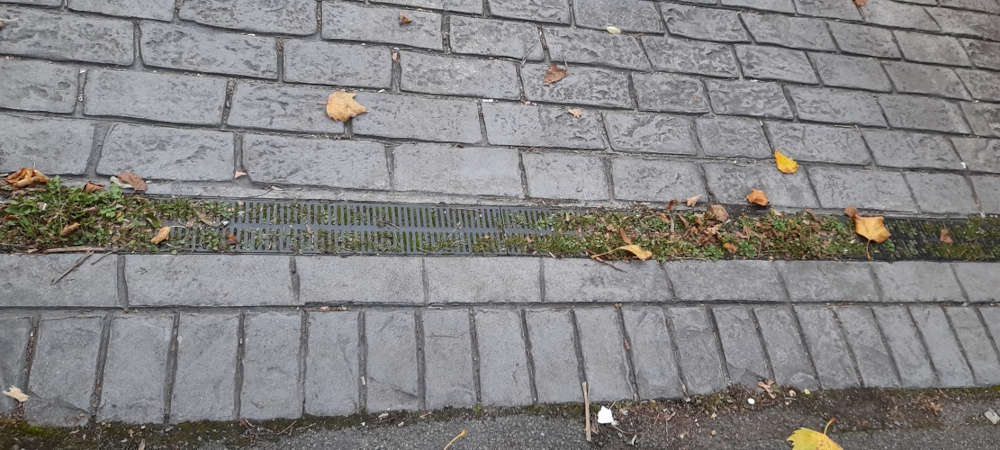
Bricked over front garden with leaves and debris accumulating around the drainage grille.
Even if grilles and gaps are put in correctly, do they work, especially in the torrential downpours we’re getting due to climate change? Often, not well.
This is mainly because, perhaps contrary to householder’s expectations, they do actually need to be maintained! As with “permeable” paving, it doesn’t take long for moss spores, weed seeds, atmospheric dust and falling leaves, twigs, flower and seed casings from street trees to accumulate in the soakaway area. They’re blown and washed in by wind and rain, pressed in by footfall and vehicles which break up the dry leaves, twigs and casings, and even swept in by householders trying to keep the surface looking presentable.
This accumulated debris begins to block the soakaway, and of course gets wet, again creating the perfect growing medium. So it’s not long before the grille or gap becomes noticeably blocked.
This is when the householder should lift the grilles or gap structure and clear out the accumulated debris. But few actually do this. So it doesn’t take long for an unmaintained grille or gap to become more or less completely blocked. That means that all but the lightest rain just can’t flow into it any more, so flows over it instead.
And even if the soakaway is kept reasonably clear, it may not be able to cope with the really heavy downpours we’re increasingly experiencing.
A weed and moss-filled grille soakaway next to sealed paving.
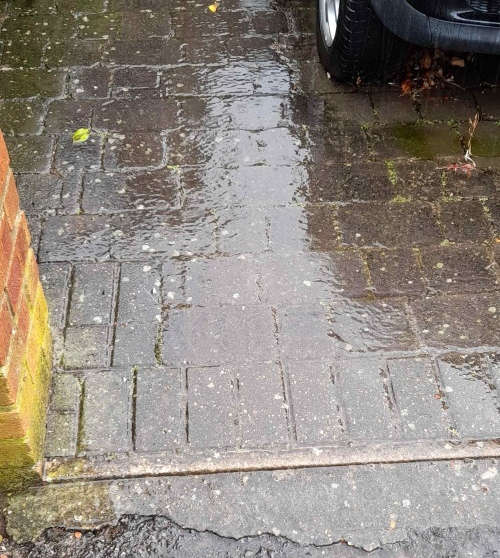
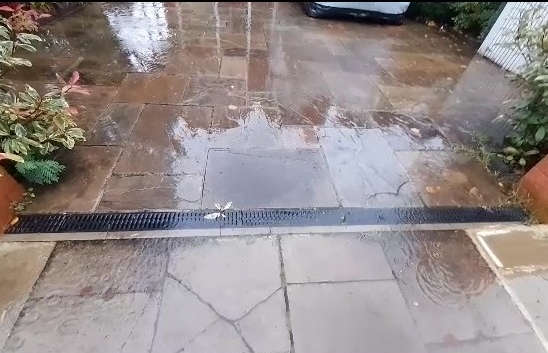
Rain running off an impermeably-paved garden, overtopping the soakaway.
From here it’s a short step to local surface water flooding, more pressure on local drains and sewers, leading to sewage discharges plus more herbicides, microplastics and other pollutants entering local rivers, waterways and groundwaters.
The Government and local authorities need to recognise these realities, as well as the many other reasons why extensive paving in front gardens is making the effects of climate change worse and adding to the poor state of nature in the UK. The weak, inadequate 2008 regulations need to be changed rapidly.
The parking surface should be the minimum necessary and of matrix construction, so that plants can grow in it and there is direct contact between rain and soil. The rest of the garden should be green, and the only hard surfacing the path to the front door.